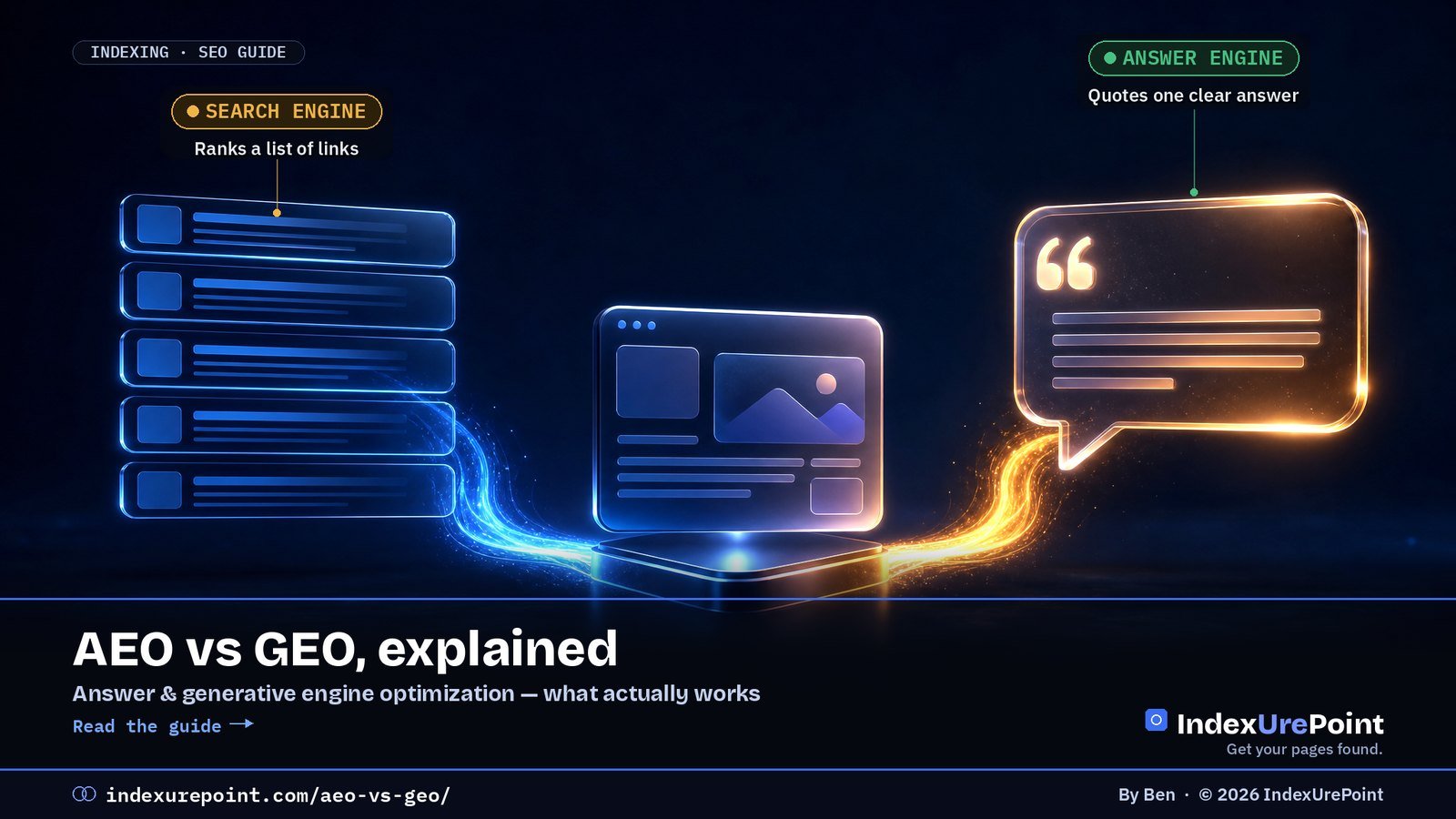
AEO (answer engine optimization) and GEO (generative engine optimization) are two names for the same goal: getting your content used and cited in AI-generated answers — and the foundation under both is ordinary indexing.
- AEO is the older, broader term; GEO stresses generative AI. The practical work is identical.
- US search demand: “answer engine optimization” ~2,400/mo and rising; “generative engine optimization” ~4,400/mo but falling (DataForSEO, Sept 2026).
- Bing matters disproportionately: 87% of ChatGPT search citations matched Bing’s top results in Seer’s 100-query study.
- The core levers: direct answers up front, specifics over adjectives, visible authorship, clean schema, and letting AI search crawlers in.
- Beware “secret GEO tactics” sellers: the measurable levers are ordinary SEO with sharper answers.
AEO (answer engine optimization) and GEO (generative engine optimization) are two names for the same goal: getting your content picked up and cited in AI-generated answers — Google AI Overviews, ChatGPT, Perplexity, Copilot.
AEO is the older term (from featured snippets and voice assistants); GEO emphasises generative AI. In practice the work is identical: be indexed, answer questions directly, and be trustworthy enough to quote.
AEO vs GEO vs SEO
Answer engine optimization
Focus: being the answer — featured snippets, voice assistants, and now AI answers.
Generative engine optimization
Focus: being cited or mentioned by large language models in generated answers.
SEO is the foundation under both. AI answers are built on pages that search engines have already crawled and indexed; if you’re not indexed, no amount of AEO or GEO helps. That’s why this site treats getting indexed as step zero.
| SEO | AEO / GEO | |
|---|---|---|
| Goal | Rank a page in results | Be the quoted answer |
| Unit of success | Position & clicks | Citations & mentions |
| Key structure | Titles, headings, links | Question H2s + first-two-sentence answers |
| Measurement | GSC Performance | Bing AI Performance, AI referrals, spot checks |
| Foundation | Crawled, indexed, trustworthy pages | |
What the work actually is
- Be indexed in Google and Bing. Google’s AI Overviews build on Google’s index; Microsoft Copilot builds on Bing. Set up Bing Webmaster Tools and IndexNow, not just Search Console.
- Answer first. Put the direct answer in the first two sentences under a question-style heading. Models lift clear, self-contained sentences.
- Be specific. Concrete steps, named tools, exact labels and sourced facts are more quotable than generalities.
- Show who’s behind it. A consistent brand, a clear about page and first-hand experience signal trust.
- Use clean structured data. Article and FAQ schema help machines parse the page.
- Let the right crawlers in. Blocking AI search crawlers opts you out of their answers — see AI crawlers and robots.txt.
Be wary of anyone selling AEO or GEO as a separate discipline with secret tactics. The practical difference from good SEO is emphasis: clearer answers, more specifics, and making sure Bing — not just Google — can index you. Our deeper playbook: how to get cited in AI search.
How to measure it
- Bing Webmaster Tools → AI Performance (beta) shows visibility in Microsoft’s AI experiences.
- Google Search Console includes AI Overview appearances in the regular Performance data, without a separate filter.
- Referral traffic from chatgpt.com, perplexity.ai and copilot in your analytics shows real visits from AI answers.
- Manual spot checks: ask the assistants your target questions and note whether you’re cited.
Where to measure it. For Google, the Generative AI report in Search Console shows impressions in AI Overviews and AI Mode: how to read it.
FAQ
Is AEO the same as GEO?
In practice, yes. Both aim to get your content used in AI-generated answers. AEO is the older, broader term; GEO focuses on generative AI specifically.
Does AEO replace SEO?
No. AI answers depend on crawled and indexed pages, so SEO remains the foundation. AEO and GEO shift the emphasis toward direct, quotable answers.
Do I need llms.txt for GEO?
It’s optional. llms.txt is a proposed file listing your key content for AI tools; it’s cheap to add, but no major assistant has confirmed it as a ranking factor.
How long does it take to get cited in AI answers?
Once a page is indexed and clearly answers a question, it can be cited quickly — but citations fluctuate. Consistent, specific, trustworthy content is what keeps you there.
Which term should I use, AEO or GEO?
They describe the same practice. AEO predates generative AI (featured snippets, voice); GEO arrived with LLM answers. Search data shows AEO rising and GEO falling as the label.
Can a brand-new site get cited in AI answers?
Yes, once indexed — assistants favour clear, specific, current answers, and small sites that publish them do get cited. Indexing speed is usually the bottleneck.